
National Poison Prevention Week, which President Kennedy launched in 1961, was originally meant to protect children from accidental poisonings. The effort has since grown to include pets. The American Society for the Prevention of Cruelty to Animals (ASPCA) and the Pet Poison Helpline promote awareness and provide information to pet owners during the third full week in March. Other groups, such as the American Animal Hospital Association (AAHA), work to raise awareness all month long.
While there are numerous substances that can be harmful to pets, there are 10 common toxins that all pet owners should be aware of. These toxins include household cleaners, medications, plants, and certain foods. By being aware of these potential dangers and taking the necessary precautions, you can help keep your pet healthy and safe.
Below are some of the most common toxins that pet owners should be aware of:
- Chocolate: Chocolate contains a compound called theobromine, which is toxic to dogs and cats. The darker the chocolate, the more toxic it can be.
- Xylitol: Xylitol is a sugar substitute found in sugar-free gum, candy, and other products. It can cause hypoglycemia (low blood sugar) and liver failure in dogs.
- Grapes and raisins: Grapes and raisins can cause kidney failure in dogs.
- Onions and garlic: Onions and garlic can damage red blood cells in dogs and cats, leading to anemia.
- Antifreeze: Antifreeze contains ethylene glycol, which is highly toxic to pets. It can cause kidney failure and death.
- Rat poison: Rat poison contains various chemicals that can be lethal to pets if ingested.
- Household cleaners: Household cleaners can be toxic if ingested by pets. They can cause irritation to the skin, eyes, and respiratory system.
- Medications: Many human medications can be toxic to pets. Some examples include acetaminophen (Tylenol), ibuprofen (Advil), and antidepressants.
- Insecticides: Insecticides can be toxic to pets if ingested or if they come into contact with their skin.
- Plants: Many plants can be toxic to pets if ingested. Some common examples include lilies, azaleas, and daffodils.
While this list is not exhaustive, make sure you wise-up on these potentially poisonous household substances:
- Anticoagulant rodenticides: difenacoum, bromadiolone, brodadiolone, coumatetralyl
- Ibuprofen: Nurofen, Advil
- Metaldehyde: Slug bait
- Human oral contraceptives (very low toxicity)
- Diclofenac sodium (a similar drug to Ibuprofen)
- Salbutamol: Ventolin inhalers
- Alphachloralose rodenticides
- Paraquat
- Wallpaper paste (very low toxicity)
- Borax / Boric acid ant killer gels
- Bonemeal
- Glyphosate based herbicides
- Asprin
- Cannabis
- Batteries
- Bendiocarb: powder ant killers
- White spirit / barbecue lighter fluid
- Antifreeze
- Loperamide: anti-diarrhoea drugs
- Bleach
- Pyrethrin-based insecticides
- Creosote
- Calcipotriene: psoriasis cream
- Temazepam
What Are Some Tips to Poison-Proof My Home?
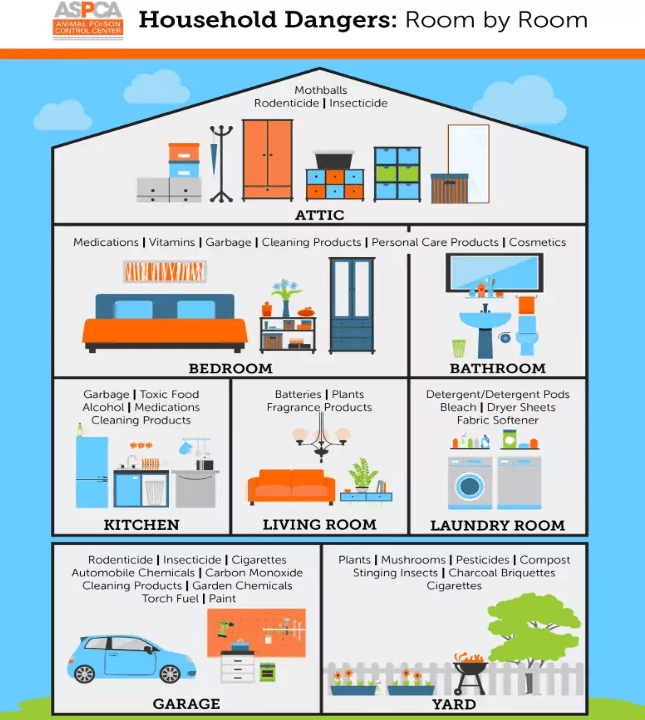
Pets are curious — smelling, tasting and eating whatever interests them. The Pet Poison Helpline offers ways to poison-proof your home. Let’s look room-by-room:8
- Living room: Make sure your plants are pet-friendly. Check fragrance sources: potpourri can cause chemical burns, and aerosols can harm caged birds. Nicotine — in cigarettes, chewing gum or patches — is poisonous. Batteries, whether loose or in a remote, can burn if chewed. And your purse or backpack can be a treasure trove of medications, cigarettes or deadly sugarless gum.
- Kitchen: Many foods meant for humans should be kept securely away from pets, as detailed on the ASPCA website. Garbage cans containing discarded poisons are also a hazard. And alcoholic beverages can be fatal.
- Bathroom: Here’s where you’ll find most of your OTC and prescription medications, often in easy reach on countertops. Never give human medications to animals. Tylenol and Advil, for example, are highly poisonous to pets. Close the bathroom door when using harsh chemicals to clean. And keep the toilet lid closed to stop Fido from drinking chemicals.
- Storage: Lock away products stored in utility rooms, like rat poisons and insecticides. Rats can shift the products around, possibly into your pet’s reach. Flea and tick products for dogs are harmful to cats. And some glues can expand in the belly, requiring surgical removal.
- Garage: Antifreeze tastes sweet to pets and can be extremely toxic. Other automotive products, like brake fluid and windshield cleaner, contain similarly toxic ingredients. Wipe up any spills immediately. Better yet, choose safer products.
- Yard and Garden: Pets are attracted to everything from fertilizers (such as bone or blood meal) to snail killers and yard insecticides. Avoid their use entirely or find the safest versions. And let commercially sprayed herbicides dry completely on your lawn before you allow your pet to run on it.
Awareness and education are your most powerful tools to keep your pet safe.
Make sure your home is poison-free. And add the emergency phone numbers for your veterinarian, animal hospital, and a 24/7 pet poison helpline to your contacts list, just in case.
 Mon Valley Paws