

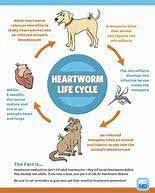

April is the beginning of the Spring season, and the emergence of mosquitoes has begun. Mosquitoes acquire the parasite while feeding on an infected host which develops into a mature infective larva. The larva is deposited when a bite occurs, and the life cycle of the heartworm begins. As heartworms travel through the body, they cause extensive damage to vital organs such as liver, lungs, kidneys, and heart. Heartworms affect an animal’s health and the quality of life long after the heartworms are gone. Heartworm is only conveyed through the bite of an infected mosquito; therefore, an infected dog cannot transmit the disease to either people or other pets. It takes approximately 6 months for the larvae to mature and if left untreated, their numbers constantly increase. Heartworms can live 5-7 years in dogs and 2-3 years in cats. Dogs are a natural host for heartworms whereas cats are not a normal host and most larvae do not mature into adult worms. However, immature worms can cause damage to cats in their respiratory system.
One of the first symptoms is coughing. Coughing up bloody mucous and chest pain follow. Vomiting, weight loss, fatigue and difficulty breathing are other signs of the disease. If your pet displays any of these symptoms, X-rays and blood tests need to be performed to determine the severity of the disease. Our pets depend on us to take care of them. Heartworm prevention is one of the best ways we can protect our faithful companions from disease and help ensure they will be with us for many years.
Heartworm Facts You Should Know
- Heartworms have been reported in all 50 states.
- Heartworms live in other mammal species such as foxes, wolves, coyotes, and sea lions.
- Cats have a 1 in 3 chance of naturally fighting off a heartworm infection.
- About 100% of dogs exposed to heartworm larvae will develop an active infection.
- It is recommended cats older than 7 months of age be tested for heartworms before starting heartworm prevention.
- One million dogs are estimated to have heartworm disease in the United States each year, but only 30% will be diagnosed by your vet.
 Mon Valley Paws