
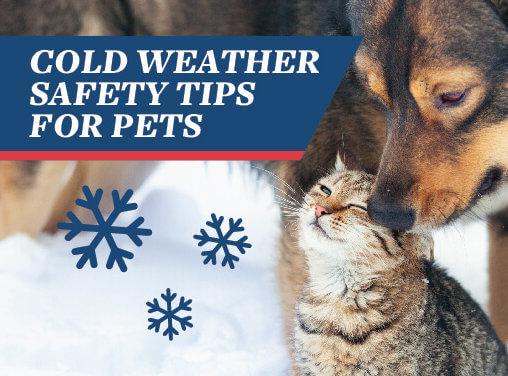
2026 has become a particularly cold winter for humans and pets alike. The following safety tips will keep them warm and safe:
Protect their paws.
Use pet-friendly ice melt products. Salt and other chemicals used to melt snow and ice can irritate a pet’s paws. Wipe their paws with a damp towel before your pet licks them and irritates their mouth.
Take care of their coat and skin.
Towel dry your pet as soon as he or she comes inside. Pay special attention to paws and in between the toes. Remove any snow from between foot pads. If possible, keep your dog’s coat longer in winter for warmth. If your dog is short-haired, consider getting a coat or sweater for your pet. Keep pet bathing to a minimum when it’s cold to avoid dry skin. If your pet needs a bath, use a moisturizing shampoo.
Antifreeze is a deadly poison.
Wipe up spills and store antifreeze out of reach.
Know your pet’s limits outdoors.
Be aware of how your pet tolerates cold weather and adjust as needed.
Check your engine.
Sometimes cats use an engine to keep warm. Check underneath your car, bang on the hood, and honk the horn before starting the engine to make sure a cat hasn’t taken refuge on your engine.
Use space heaters with caution.
The heater can burn your pet or be knocked over, possibly starting a home fire.
Watch for hypothermia.
If your pet is whining, shivering, anxious, slower than usual or stops moving, seems weak or starts looking for warm places to burrow, get them back inside quickly because they are showing signs of hypothermia. Frostbite is harder to detect and may not be fully recognized until a few days after the damage is done. If you suspect your pet has hypothermia or frostbite, consult your veterinarian immediately.
 Mon Valley Paws